Rebuilding the Future While Running the Present
PacSun's storefront replatforming, carried out while the existing experience and the seasonal calendar kept moving
- ATTRIBUTION
- Adam Shupe
- OWNED
- responsible for digital merchandising decisions within his remit
- CONTRIBUTED
- mobile-first wireframes and experience requirements
- NOT OWNED / TEAM
- Development, customer service, email, and specialist analytics, channel, and asset work; the broader replatforming remained collective.
- WINDOW
- Approximately 2020 through post-launch 2021
Chronicle
Approximately 2020 — what we were replacing
I remember the work beginning in approximately 2020 as a rebuild that could not wait for the present to stop. The existing storefront carried the business while we prepared its replacement.
We were moving from SiteGenesis to SFRA. Nearly the entire storefront was being reconsidered around a mobile-first experience while customers and the seasonal calendar kept moving through the existing one.
I understood the old foundation and customer experience as no longer fitting what we were trying to operate and design for. But the replacement was not a blank sheet. It had to work inside the technology ecosystem already running the business, which constrained the new experience before design began.
The change did not begin with a clean break. It began with overlap: one experience carrying the day while another accumulated plans, decisions, dependencies, and uncertainty behind it.
2020 through summer 2021 — building while running
Through 2020 and into summer 2021, the hardest part was simultaneity. We planned the replacement while operating the storefront in front of customers. Multiple web experiences had to be maintained at once. Seasonal work, product changes, and everyday decisions did not pause for the future state.
My part was bounded. I made digital merchandising decisions inside my remit, shaped what content, recommendations, personalization, and measurement would have to do on the new storefront, and drew mobile-first wireframes for the homepage, listing and product pages, and the surfaces around them. Partner teams owned development, customer service, email, and the specialist analytics, channel, and asset work.
Some of that work did not stay finished. Homepage work tied to a date on the calendar was built and ready to run, and then the launch date moved, and it had to be built again. Nothing about it had been wrong. It had been made for a version of the future that no longer existed.
That was the shape of the whole period. Work was finished against a date, the date moved, and finished work became work again.
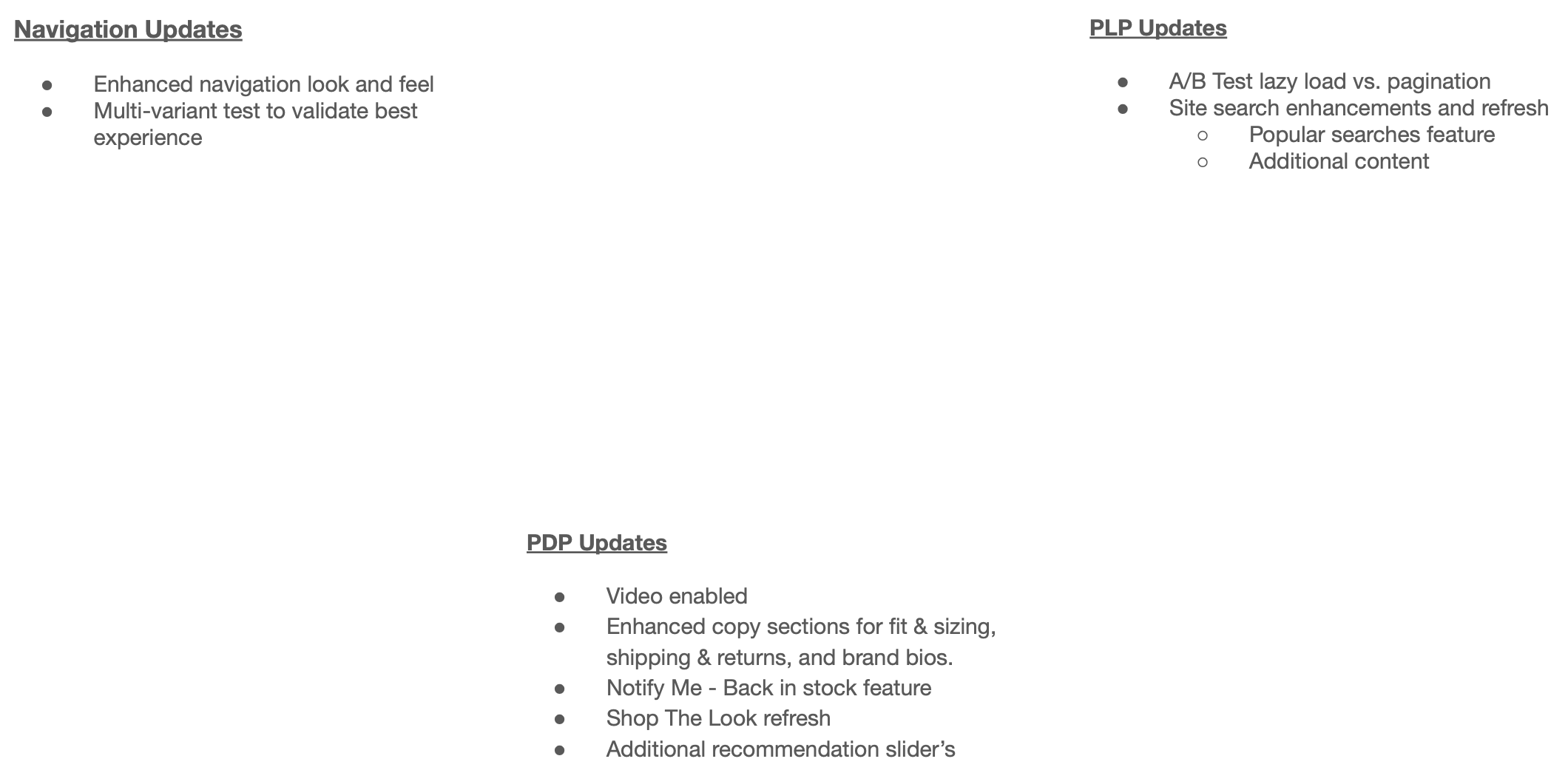
Planned storefront enhancement summary.
Planning is not execution and does not establish that every listed item shipped or belonged to Adam.
Provenance — governed derivative of page 4 of the internal planning deck.
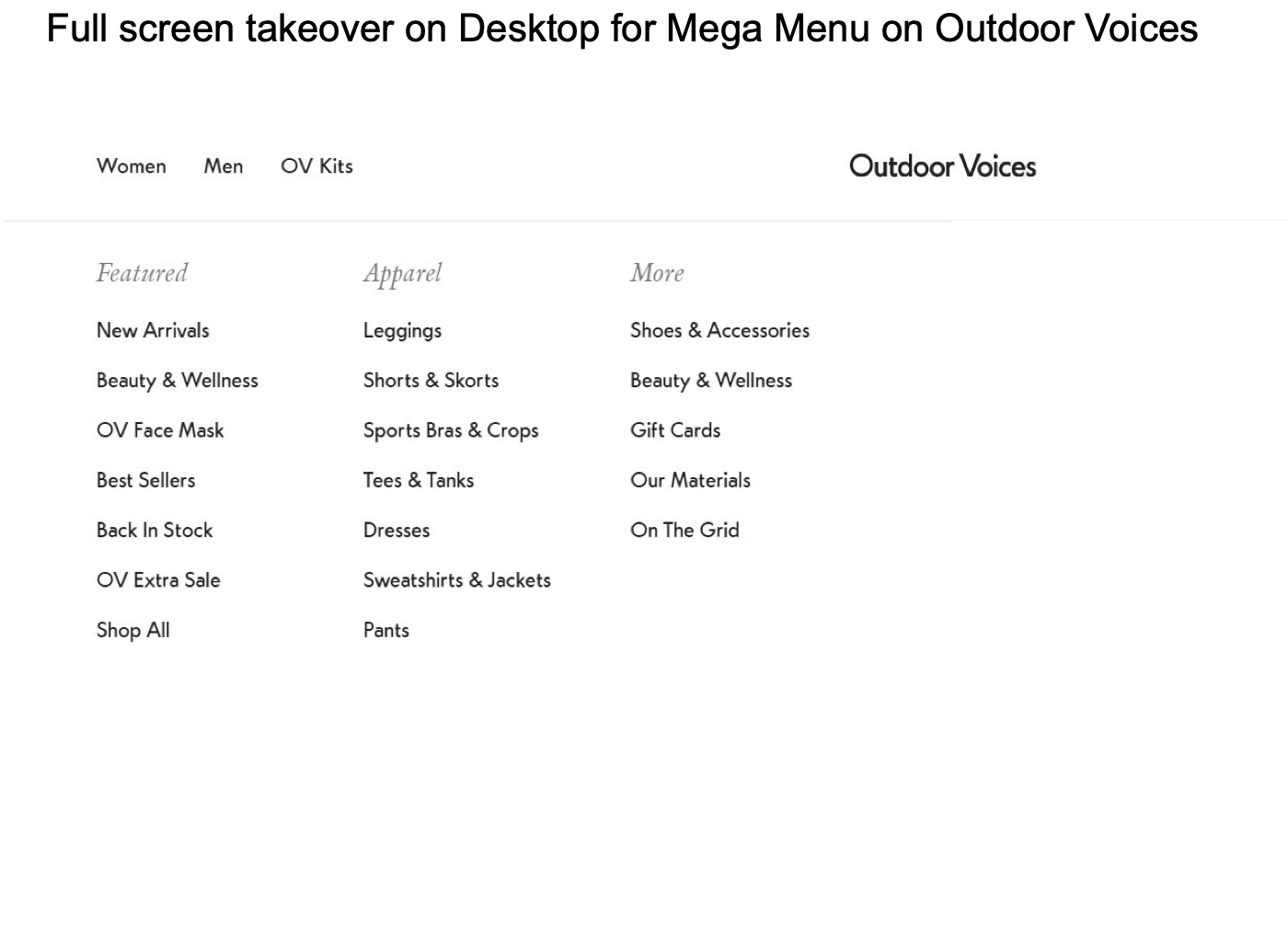
One navigation reference used during design thinking.
A reference is not final design, implementation, causality, or ownership evidence.
Provenance — governed page-12 navigation-reference Figure from the internal inspiration deck.
Summer 2021 — the planned launch slips
The original target was the beginning of the third quarter of 2021, as I remember it. The site was not ready, and the planned launch slipped.
There was no single dramatic decision. Plans became provisional, work was revisited, and the replacement was compared surface by surface against the storefront still serving customers — the differences between them becoming the list of what it still needed before it could carry the business. The work had already absorbed months of planning and compromise.
As summer narrowed, the holiday calendar stopped being background and became the pressure around every choice. September was effectively the last safe window; after it, Black Friday and the rest of the holiday schedule made a platform change too risky to carry.
Missing that window would not have meant waiting a few weeks. It would have meant running the storefront we were replacing through the heaviest operating period of the year, and holding the replacement until the calendar opened again.
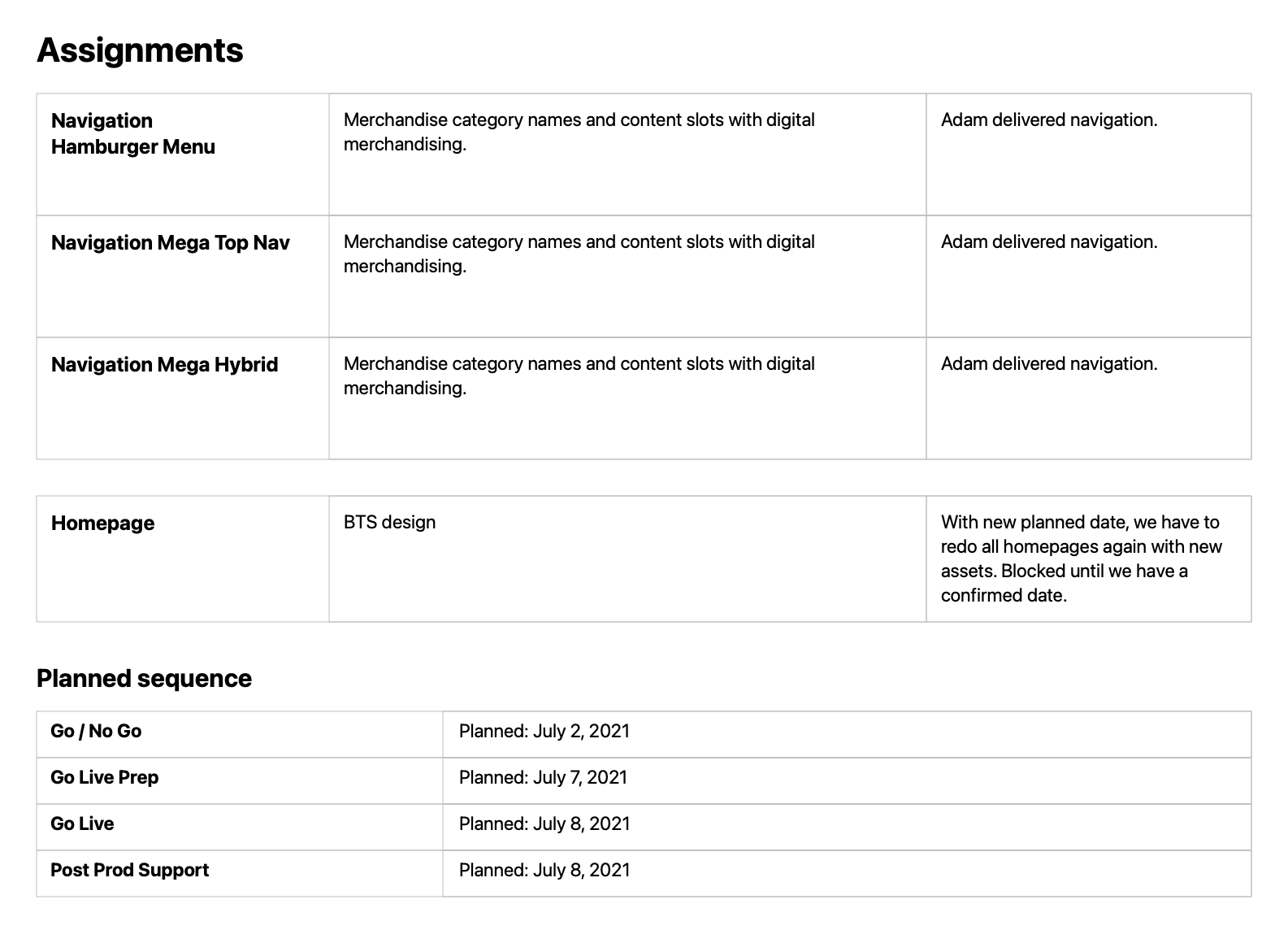
Sanitized role, changed-date homepage, and planned launch-sequence excerpt.
Planned dates and states are not proof of production execution or outcome.
Provenance — sanitized governed derivative; colleague identity and unrelated operational detail omitted.
Early September 2021 onward — launch and stabilization
I place the production launch in early September 2021, inside the window that had been closing all summer. The dates we had planned against stayed planned dates; this was the one the business actually moved on.
Launch did not complete the story. The team moved into stabilization, working through customer-facing defects while the business ran on the replacement storefront. Things a customer could see still needed fixing after the storefront was live.
Data and analytics discrepancies made interpretation harder, and the analytics platform itself was being replaced over the same period. We were working through visible defects while reporting behavior was changing underneath them, and it was sometimes hard to separate an actual customer-behavior issue from a reporting or analytics discrepancy. I cannot collapse those conditions into one causal account.

Partial mobile storefront trace during post-launch stabilization.
A partial trace is not evidence of overall launch quality, causality, performance, or commercial result.
Provenance — sanitized governed derivative of one bounded post-launch condition.
August 6, 2026 — what I would not repeat
Years later, when I ask interview candidates what they were good at but would never want to do again, I think of this replatforming.
I could do this work well. I could hold the future state and the live business together, decide inside a shifting calendar, and keep working when a defect and a reporting discrepancy were hard to separate.
What I would not choose again is the duration of that split attention. Maintaining the present while rebuilding nearly everything behind it meant no decision belonged only to the future. A changed date reached backward into finished work. Launch opened stabilization rather than closing the effort. The calendar approached whether the replacement was ready or not.
That is what remains for me after the platform names and the planned dates fall away: this was work I could do well, and I would not choose to repeat it.
THE WORK
Adam Shupe — responsible for digital merchandising decisions within his remit; contributed mobile-first wireframes and experience requirements to a cross-functional replatforming team
Development, customer service, email, and specialist analytics, channel, and asset work; the broader replatforming remained collective.
Reconstructed — assembled in 2026 from selected surviving private material and dated first-person testimony given August 6, 2026
My account fixes periods rather than exact dates. The selected sources establish a planned sequence and continued post-launch work, but not the approximate start or an exact production day. Post-launch defects and analytics or reporting discrepancies cannot be separated into one causal account.
No commercial result or performance evidence is published or implied. Launch and continued operation do not establish one.
No complete before-and-after pair exists in this Record. The published design reference and partial post-launch Trace cannot establish causality, overall quality, or performance.
GO DEEPER
SOURCES & CONTEXT
Published August 11, 2026 · Revised September 12, 2026
Kept by Adam Shupe · adamshupe.com